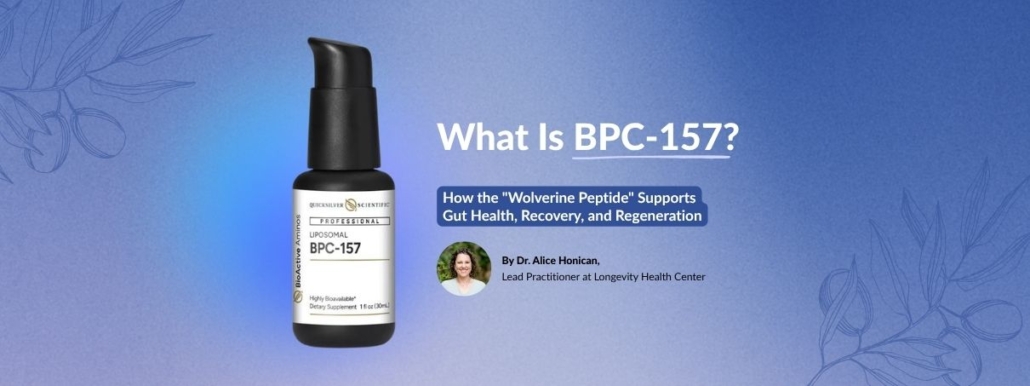
What Is BPC-157? How the “Wolverine Peptide” Supports Gut Health, Recovery, and Regeneration
By Dr. Alice Honican, Lead Practitioner at Longevity Health Center
Peptides are everywhere right now.
From social media to wellness podcasts, peptides have become one of the most talked-about topics in functional and regenerative medicine. Patients are hearing about peptides for everything from weight loss and longevity to energy, recovery, and healing.
But with all of this information comes a lot of confusion! People are asking, “Which peptide is right for me?” “How long do I need to take it?” “ Will I need multiple injections every week?” “Are there any negative side effects?”
These are questions I hear often in my practice.
The truth is, not every peptide is appropriate for every person or every health goal. At Longevity Health Center, we believe peptide therapy should be intentional, personalized, and used strategically as part of a comprehensive, root-cause approach to healing.
One peptide that has generated significant interest for its restorative properties is BPC-157, often referred to as the “Wolverine peptide” because of its remarkable ability to support the body’s natural repair and regeneration processes.
What Is BPC-157?
BPC-157, short for Body Protection Compound-157, is a peptide composed of 15 amino acids. It is derived from a naturally occurring protein found in human gastric juice and was first described in scientific literature by researcher Predrag Sikirić and colleagues in 1993.
While the naturally occurring protein is much larger, synthetic BPC-157 retains many of its healing and protective properties, making it a promising tool in regenerative medicine.
Why Is BPC-157 Called the “Repair and Regeneration Peptide”?
BPC-157 is often referred to as the “repair and regeneration peptide” because of findings from laboratory and animal research that have explored its potential role in tissue repair and recovery.
Rather than focusing on symptom relief, researchers are studying whether BPC-157 may influence several biological processes involved in normal tissue healing, including blood vessel formation, inflammatory signaling, cellular migration, and connective tissue repair. These areas of investigation have generated significant scientific interest because they suggest BPC-157 may affect multiple biological systems.
Although the preclinical research is promising, human clinical studies remain limited. More research is needed to determine whether these findings translate into safe and effective therapeutic applications in people.
How Does BPC-157 Work?
Research on New Blood Vessel Formation
BPC-157 supports a process called angiogenesis, or the formation of new blood vessels. Through pathways involving vascular endothelial growth factor (VEGF), it helps improve blood flow, oxygen delivery, and nutrient transport to injured tissues.
This enhanced circulation creates an environment that is conducive to healing and recovery.
Research on Inflammatory Pathways
Inflammation is an important part of healing, but when it becomes chronic, it can contribute to ongoing symptoms and delayed recovery.
BPC-157 appears to help regulate inflammatory pathways by influencing nitric oxide, prostaglandins, and inflammatory markers such as COX-2 and interleukin-6. By promoting a more balanced inflammatory response, it may support tissue healing while helping to prevent further damage.
Research on Tissue Repair and Cellular Regeneration
One of BPC-157’s most impressive properties is its ability to encourage cellular migration to injured areas.
It helps direct fibroblasts, collagen, and other repair cells to damaged tissue, supporting regeneration in muscles, tendons, ligaments, joints, skin, and connective tissues. This is one reason BPC-157 has become increasingly popular among athletes and individuals recovering from injuries.
Research on the Gut-Brain Connection
At Longevity Health Center, we often say that gut health is foundational to overall health.
BPC-157 has demonstrated protective effects on the gastrointestinal lining and may help support intestinal barrier integrity, making it particularly interesting for individuals dealing with digestive concerns and increased intestinal permeability, often referred to as “leaky gut.”
Because the gut and nervous system are deeply connected, improving gut health may also positively influence neurological function and overall well-being.
Is BPC-157 Being Studied?
Researchers are investigating BPC-157 for its potential role in a wide range of biological processes related to tissue repair, recovery, and gastrointestinal health. Most of the available evidence comes from laboratory and animal studies, and human clinical research remains limited.
Areas of ongoing research include:
- Sports-related injuries and exercise recovery
- Muscle strains and tendon injuries
- Ligament and joint healing
- Recovery following surgical procedures
- Inflammatory processes
- Connective tissue repair
- Gastrointestinal health and intestinal barrier function
- Recovery from gastrointestinal irritation or injury
- Nerve regeneration and neurological function
- Autoimmune and other complex chronic conditions
Why Is Liposomal Delivery Being Studied for Peptides?
Researchers continue to investigate different delivery methods that may help improve the stability and absorption of peptide-based compounds. One area of interest is liposomal delivery technology, which uses microscopic lipid-based vesicles (liposomes) to encapsulate active ingredients.
Scientists are studying whether liposomal formulations may help protect certain peptides from degradation in the digestive tract and influence how they are absorbed by the body. Researchers are also exploring whether liposomal delivery may facilitate transport across biological membranes and through lymphatic pathways.
A Root-Cause Approach to Recovery
Here at Longevity Health Center, we believe that true healing happens when we identify and address the underlying factors contributing to illness and injury.
Peptide therapies like BPC-157 can be powerful tools because they work in alignment with the body’s natural healing processes. Whether someone is recovering from an injury, struggling with digestive issues, or navigating chronic inflammation, supporting repair and regeneration at the cellular level can help create a stronger foundation for long-term wellness.
If you’re curious whether BPC-157 may be appropriate for your health goals, our team would be happy to discuss how this innovative peptide may fit into your personalized treatment plan.